How to Create the Perfect Crating and Packaging for Your Products?
Creating the perfect crating and packaging for your products is essential in today's competitive market. Effective packaging not only protects your items but also enhances your brand image. It communicates quality and care to your customers before they even unbox.
Consider the materials you choose. Durable options can prevent damage during shipping. However, they may increase costs. Striking a balance between quality and expense is crucial. Your choices reflect your commitment to excellence.
Design is another critical factor. It should be functional yet appealing. An aesthetically pleasing package can attract buyers. Yet, remember that simplicity sometimes speaks louder than complexity. Reflect on your packaging strategies regularly. This ensures they align with evolving customer expectations and market trends.
Understanding the Importance of Crating and Packaging for Products
Crating and packaging are critical aspects of product presentation and protection. A well-designed package not only attracts customers but also ensures the product's safety during transit. According to a study by Packaging Digest, 72% of consumers say packaging design influences their purchase decisions. This statistic highlights the importance of thoughtful crating and packaging strategies.
The materials you choose can impact not just the environment but also customer perception. Sustainable packaging has been shown to improve brand loyalty. Data reveals that 57% of shoppers are willing to pay more for eco-friendly packaging. Failing to address these preferences can result in lost sales opportunities.
**Tip:** Utilize biodegradable materials when possible. This step can enhance your brand’s image.
Poor crating and packaging can also lead to damaged products. Over 30% of products are returned due to shipping damage. This inefficiency impacts profit margins significantly. Companies must prioritize robust design and quality materials.
**Tip:** Regularly review your packaging process. Look for areas to improve and minimize waste.
Ultimately, investing in effective crating and packaging is essential to customer satisfaction and retention. The importance of these factors cannot be overstated in a competitive market.
Understanding the Importance of Crating and Packaging for Products
Choosing the Right Materials for Effective Crating and Packaging
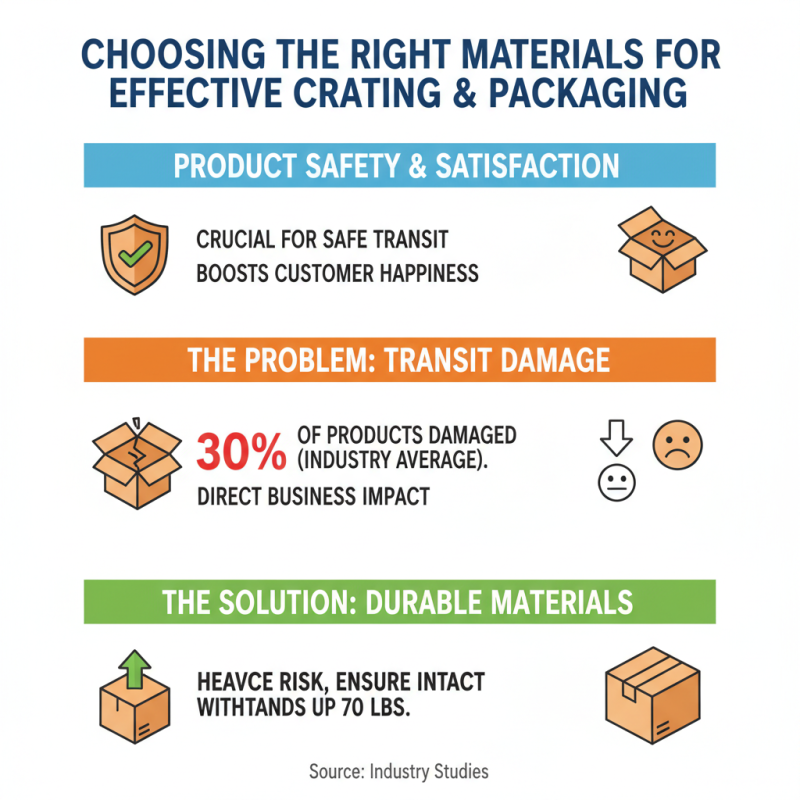
Choosing the right materials for crating and packaging is crucial for product safety and customer satisfaction. Studies show that around 30% of products are damaged during transit, directly impacting businesses. Selecting durable materials can reduce this risk. For instance, using heavy-duty cardboard can withstand loads up to 70 pounds, ensuring your products arrive intact.
Sustainability is also vital in packaging today. A report from the Packaging Europe Insights states that 62% of consumers prefer eco-friendly packaging. Using biodegradable materials not only attracts customers but also aligns with global efforts to reduce waste. Companies must balance between cost and sustainability, reflecting on how choices affect both their brand image and the environment.
However, many businesses overlook the importance of customized packaging. Off-the-shelf solutions might seem cost-effective, but they often fail to provide adequate protection. Without tailored designs, products can shift during transit, leading to damage. This is an area requiring critical evaluation from manufacturers. Continuous improvement in packaging design is essential to meet evolving consumer expectations and reduce shipping costs efficiently.
Designing Packaging that Protects and Enhances Product Appeal
Designing packaging that protects and enhances product appeal is a complex endeavor. According to a study by the Paper and Packaging Board, 72% of consumers say packaging design influences their purchasing decisions. This statistic highlights the importance of aesthetically pleasing and functional packaging.
Choosing the right materials can make a significant difference. For example, sustainable packaging options are becoming increasingly popular. A survey by Nielsen found that 66% of global consumers are willing to pay more for sustainable brands. However, not all sustainable materials provide adequate protection, which can lead to product damage. This is a critical area needing improvement.
Color and typography also play vital roles in packaging design. A study from the University of Loyola found that color increases brand recognition by 80%. Yet, brands often overlook how packaging colors can impact consumer emotions. The choice of font can affect readability and brand perception as well. A mistake in this area can diminish the overall appeal and effectiveness of the packaging. Balancing beauty and functionality is key, but many products still struggle to achieve this.
Implementing Sustainable Practices in Crating and Packaging
Implementing sustainable practices in crating and packaging has become essential for businesses. A report by McKinsey states that over 60% of consumers prefer sustainable packaging. This trend is not just a marketing tactic; it reflects growing environmental awareness. Companies can reduce their carbon footprint by utilizing eco-friendly materials. Many businesses are shifting to biodegradable or recycled materials. This shift can significantly lower environmental impact.
The use of sustainable practices is not without challenges. Investing in new materials may increase initial costs. However, research from the Ellen MacArthur Foundation shows that circular packaging designs can save up to $1 trillion globally. Brands may hesitate, fearing that consumers will resist higher prices. Yet, consumer trends indicate a willingness to pay more for sustainable options. Businesses need to understand the long-term benefits of sustainability over short-term costs.
Companies should continually assess their practices. Not every solution fits every product or market. Companies face the need for constant innovation. Rigid practices can stifle progress. Regular evaluations encourage adaptations to meet evolving consumer expectations and regulations. Flexibility in strategies is vital for sustainable crating and packaging to thrive.
Testing and Evaluating the Effectiveness of Your Packaging Solutions
Testing and evaluating the effectiveness of packaging solutions is crucial for any business. According to a recent report by Smithers Pira, effective packaging can improve product sales by as much as 30%. This statistic emphasizes the need to analyze each packaging element carefully. Understanding how customers interact with packaging helps refine designs for better visual appeal and functionality.
Conducting consumer surveys is one way to gather feedback. A survey can reveal preferences regarding colors, materials, and styles. Additionally, A/B testing different packaging options can provide insights into what resonates with your target audience. In fact, a study by the Packaging Design Institute found that 72% of consumers make purchase decisions at the shelf. This highlights the need for strategic packaging that stands out.
It’s essential to revisit packaging strategies regularly. Changes in consumer behavior and market trends can quickly render existing designs outdated. Some companies learn this the hard way, facing declining sales due to stale packaging. Regularly testing and evaluating packaging ensures that it remains relevant and effective in attracting customers. Constant vigilance in this area can prevent missed opportunities in a competitive market.
How to Create the Perfect Crating and Packaging for Your Products? - Testing and Evaluating the Effectiveness of Your Packaging Solutions
| Packaging Type |
Material Used |
Environmental Impact |
Cost per Unit |
Customer Satisfaction Score |
| Box Packaging |
Recycled Cardboard |
Low |
$0.50 |
85% |
| Plastic Blister Pack |
PVC |
High |
$0.30 |
70% |
| Eco-Friendly Pouch |
Biodegradable Material |
Very Low |
$0.40 |
90% |
| Glass Jar |
Glass |
Medium |
$1.20 |
95% |







 English
 Polski
  Čeština